


How to Change Your Garage to Living Space in Contra Costa County: The 2026 Homeowner’s Guide

Your most valuable asset in the 2026 Contra Costa real estate market isn't a new addition. It's the underutilized square footage you'll reclaim when you change garage to living space.
We understand the hesitation many homeowners feel when considering a renovation of this scale. With local construction costs often reaching $650 per square foot for ground-up builds, the desire for more room is frequently met with the stress of permitting hurdles and the fear of a "converted" look. You want a space that feels like a natural extension of your home's architecture, not a compromise. You deserve a result that reflects the integrity of your entire property.
This guide provides the professional roadmap you need to execute this transformation with absolute precision. We provide a transparent breakdown of professional requirements, local permitting secrets, and the structural steps needed to deliver a high-value environment. We'll explore the end-to-end process from the initial site assessment to the final bespoke finishes that define a successful partnership.
Key Takeaways
Understand why converting existing square footage is up to 60% more cost-effective than building a ground-up addition in the high-value Bay Area market.
Learn the essential structural steps to change garage to living space, from moisture-proof subfloors to meeting California Title 24 energy standards.
Identify the legal differences between a bedroom addition and a Junior ADU to select the strategic path that best maximizes your property’s potential.
Avoid costly fines and insurance complications by mastering the Contra Costa permitting process, including required site plans and energy calculations.
Discover how a "no-surprises" project management philosophy ensures your renovation remains on-time, on-budget, and built with enduring craftsmanship.
Table of Contents Why Homeowners Change Garage to Living Space in Contra Costa County Structural Essentials: Turning a Concrete Box into a Habitable Room Habitable Room vs. ADU: Choosing the Right Path for Your Home Navigating Contra Costa County Permits and Building Codes Executing Your Vision: The Pro-Construction Partnership
Why Homeowners Change Garage to Living Space in Contra Costa County
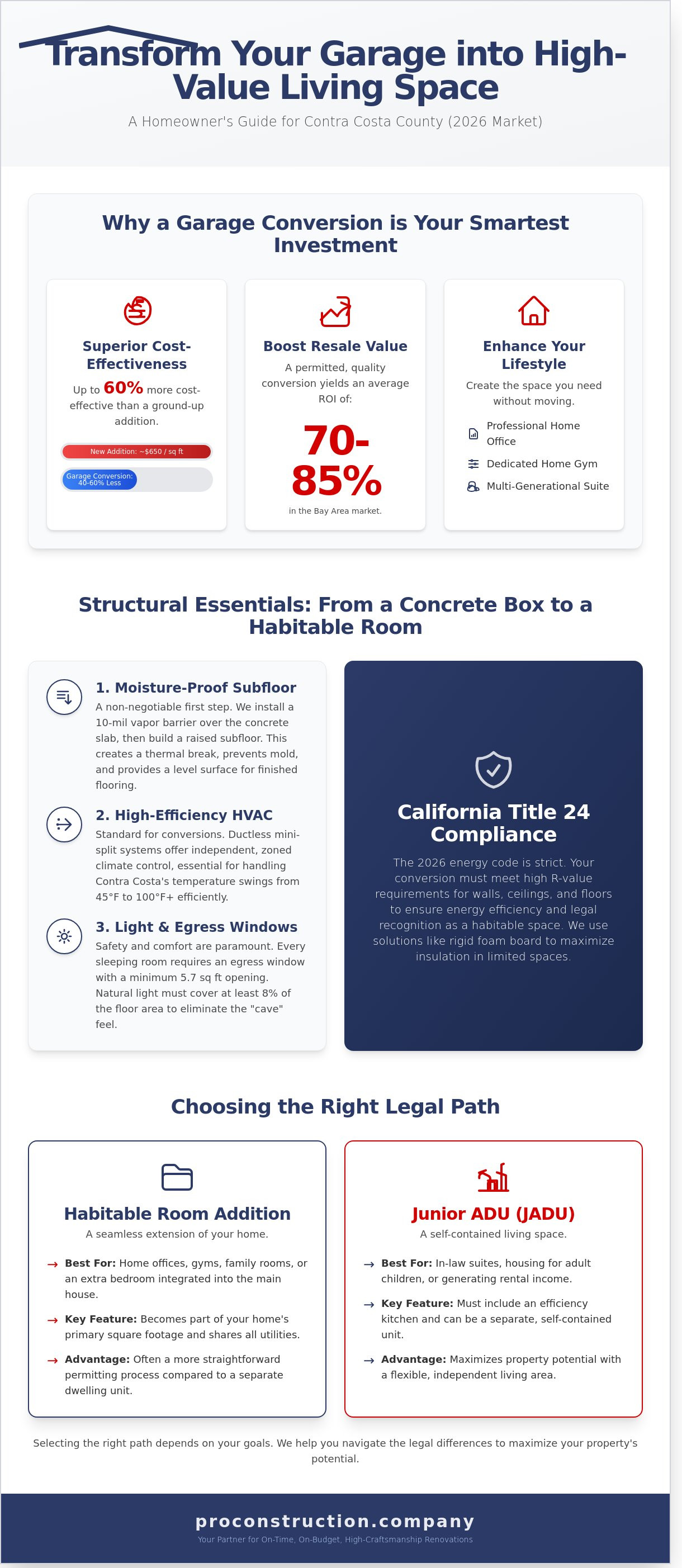
In Contra Costa County, the 2026 real estate market presents a unique challenge for growing families. Land costs remain among the highest in the nation, making every square foot of your existing property an asset of immense value. We see more families choosing to change garage to living space because it maximizes their current footprint without the astronomical expense of a ground-up addition. Converting an existing structure is typically 40% to 60% more cost-effective than building a new wing from the dirt up. This efficiency allows you to allocate your budget toward premium finishes and bespoke details that truly elevate your home's interior.
Common use cases have evolved significantly over the last few years. While the "Zoom room" remains a staple for professional remote work, we also see a surge in demand for dedicated home gyms and multi-generational housing solutions. These projects are often classified as a Secondary suite, providing a self-contained area for aging parents or adult children. We focus on delivering a seamless transition that prioritizes both daily function and long-term structural integrity.
Expanding Your Footprint Without Moving
Many local families prefer to stay in their established neighborhoods rather than face the volatility and high interest rates of the 2026 housing market. Renovating provides a psychological benefit that a stressful move cannot match. It transforms an underutilized, cluttered storage area into a professional-grade indoor space that enhances your lifestyle. We evaluate your garage's structural integrity early in our partnership. We look at the foundation slab, ceiling height, and moisture barriers to ensure the space is a prime candidate for a high-end conversion. Our goal is to create a room that feels like it was always part of the original floor plan.
Resale Value and Market Trends
Contra Costa buyers in 2026 prioritize versatile living areas over traditional covered parking, especially as public transit and ride-sharing options expand. However, maintaining curb appeal is vital for long-term appreciation. We design conversions that respect the home's original aesthetic from the street, using high-quality materials that mask the former garage's identity. This attention to detail ensures your investment remains liquid. A permitted, high-quality garage conversion in the Bay Area typically yields an average ROI of 70% to 85% at the time of resale. We maintain transparency throughout the build to ensure your project stays on-time and on-budget.
Structural Essentials: Turning a Concrete Box into a Habitable Room
Converting a garage involves far more than cosmetic updates. We define a habitable conversion as a structural transformation that adheres to the 2026 California Title 24 energy standards. This ensures your new room is safe, comfortable, and legally recognized. To successfully change garage to living space, you must address the fundamental limitations of the original structure. We focus on turning a cold, damp utility area into a seamless extension of your home through disciplined engineering and craftsmanship.
The raw concrete slab is your first hurdle. Concrete is porous and naturally breathes moisture. We install a 10-mil vapor barrier to prevent groundwater from ruining your finishes. A raised subfloor provides a vital thermal break and a level surface for premium flooring materials. This step is non-negotiable for maintaining air quality and preventing mold growth over time.
Contra Costa County microclimates vary from 45 degrees in the winter to over 100 degrees in the summer. High-efficiency mini-split HVAC systems are the gold standard for these conversions. They offer independent zoned control without the need for bulky, expensive ductwork. Our team prioritizes these systems because they deliver precision climate control while maintaining high SEER2 efficiency ratings.
Safety and comfort go hand-in-hand. Every sleeping room requires an egress window with a minimum net clear opening of 5.7 square feet. We also ensure natural light covers at least 8 percent of the total floor area. This transforms the "cave" feel of a garage into a bright, airy environment that feels like it was always part of the original floor plan.
Insulation and California Title 24 Compliance
The 2026 energy codes demand strict R-values for walls, ceilings, and floors. Rigid foam board often outperforms traditional fiberglass batt insulation in tight garage spaces. It provides higher thermal resistance per inch and creates a continuous air seal. We select high-performance, dual-pane windows with low-E coatings to meet these energy goals. This meticulous approach ensures your project passes inspections and keeps utility costs low. If you are debating between a guest room and a full rental, reviewing the latest Accessory Dwelling Unit regulations will help clarify the specific insulation requirements for each path.
Electrical and Plumbing Integration
We begin every project with a comprehensive load calculation. Most older homes in neighborhoods like Walnut Creek or Concord require a 200-amp panel upgrade to handle the added electrical demand. For those looking to change garage to living space with an en-suite bath, we route plumbing with surgical precision. We use diamond-blade slab cutting to install drains without compromising the foundation's integrity. Our team also integrates Cat6 wiring and smart hubs to future-proof your investment for 2026 technology. This level of detail is why homeowners trust us for a seamless renovation experience that adds real value to their property.
Habitable Room vs. ADU: Choosing the Right Path for Your Home
Deciding how to change garage to living space requires a clear understanding of your long-term goals. You basically have two paths: a habitable room addition or an Accessory Dwelling Unit (ADU). A bedroom addition functions as a seamless extension of your primary residence, sharing all utilities and lacking independent cooking facilities. Conversely, an ADU is a self-contained home with its own kitchen and bathroom. We often guide clients toward the ADU path because it offers superior rental potential and increases property value more effectively than a simple room conversion.
Junior ADUs (JADUs) represent a strategic middle ground for Contra Costa homeowners. Under California state law updated for 2026, a JADU must be under 500 square feet and contained within the existing walls of your home. These units allow for an efficiency kitchen and can even share a bathroom with the main house. This flexibility makes them ideal for homeowners who want to house a family member or create a private guest suite without the intensive plumbing requirements of a full ADU. We design these spaces to evolve, ensuring a room used as an office today can serve as a legal rental unit tomorrow.
The ADU Advantage in California
California legislation has streamlined the approval process, making it faster to change garage to living space than ever before. Local jurisdictions in Contra Costa County must adhere to state mandates that limit permit turnaround times to 60 days. Choosing an ADU also provides unique tax benefits. While the new construction adds value, it doesn't trigger a full reassessment of your entire property's base tax rate. We specialize in these complex transitions as experienced ADU builders in the Bay Area, ensuring your project meets every state and local requirement while maintaining separate utility metering where beneficial.
Design Considerations for Comfort
Success in a garage conversion depends on meticulous design. Most standard garages feature an 8-foot ceiling height, but once you add subflooring and insulation, that space shrinks. We utilize low-profile HVAC systems and recessed lighting to preserve every inch of vertical space. Soundproofing is another critical factor. We install resilient channels and high-density insulation to isolate the new living area from street noise or the main house. This commitment to craftsmanship ensures the space feels like a high-end suite rather than a converted utility room. We focus on integrating the new interior with your existing home's aesthetic, using matching trim, flooring, and paint to create a unified look.
Navigating Contra Costa County Permits and Building Codes
To successfully change garage to living space, you must align your vision with the rigorous standards of the Contra Costa County Building Inspection Department. We view the permitting process as a safeguard for your investment. Attempting unpermitted work is a high-risk gamble that often results in insurance claim denials or mandatory demolition orders. Real estate data from 2025 suggests that homes with unpermitted additions sell for significantly less than market value, as buyers struggle to secure traditional financing for non-compliant structures.
Your application requires a technical document package that leaves no room for ambiguity. We prepare professional site plans, architectural floor plans, and California Title 24 energy calculations. These energy reports are essential; they demonstrate that your conversion meets state-mandated efficiency levels for insulation, window glazing, and climate control. Without these documents, the county will not approve your project for construction.
Local zoning hurdles also play a critical role in your project's feasibility. In cities like Walnut Creek, municipal codes often mandate that you replace any lost covered parking spaces elsewhere on your property. Concord maintains strict setback requirements that dictate how close your conversion can sit to the property line. We analyze these local ordinances early to prevent costly design revisions later in the process.
The Permitting Process Step-by-Step
We initiate every project with a feasibility study to confirm your lot's specific zoning rights. Our team then submits detailed plans to the local municipality for review. It is standard for the county to return 'corrections,' which are specific requests for technical adjustments. We handle these revisions directly to keep the timeline on track. The process concludes with a series of inspections, culminating in a final sign-off and the issuance of a Certificate of Occupancy.
Local Fire and Safety Regulations
Safety standards in Contra Costa County are precise. We install interconnected smoke and carbon monoxide detectors that alert the entire home if a hazard is detected in the new room. We also install 5/8-inch Type X fire-rated drywall on walls separating the new living area from any remaining garage space or the original house structure. These measures are non-negotiable for passing a final inspection. For a detailed breakdown of the steps, see our guide to converting garage into living space.
Secure the future of your home with a permitted, professional conversion. Contact ProConstruction today to discuss your project's technical requirements with our expert team.
Executing Your Vision: The Pro-Construction Partnership
When you decide to change garage to living space, the project's success rests on the caliber of your construction partner. We bring 23 years of local experience to every Contra Costa County home. This deep history in the region means we understand the specific structural requirements, soil conditions, and seismic codes unique to the East Bay. We don't just build walls; we ensure the structural integrity of your home remains uncompromised for decades. Our team treats your property as a long-term investment, applying the same rigor to a garage conversion as we do to a ground-up custom estate.
Our "no-surprises" philosophy serves as the foundation of our client relationships. We manage every detail through a structured project roadmap that spans from the initial design concepts to the final walkthrough. This meticulous planning prevents the delays and confusion that often plague residential renovations. You receive a partner who prioritizes order and precision at every stage. We protect your investment through fixed-price residential contracts. This approach eliminates budget creep, ensuring the price we agree upon at the start is the price you pay at completion. Our commitment to financial transparency allows you to plan your future with absolute confidence.
Professional Management for Peace of Mind
We handle the complex, invisible work that defines a successful renovation. Our team manages the entire permitting process, coordinates with vetted local vendors, and ensures strict adherence to the 2026 California Building Standards Code. We maintain a rigorous schedule to guarantee on-time and on-budget delivery for every client we serve. Every renovation we execute reflects our dedication to bespoke craftsmanship and high-end finishes that elevate your property value. Our project managers provide regular updates, turning a complex construction journey into a seamless, stress-free experience.
Start Your Transformation Today
Your home deserves a transition that matches your lifestyle and aesthetic standards. The first step involves scheduling an initial consultation to evaluate your garage's structural potential and discuss your specific goals. It's vital to choose a partner who values your vision as much as you do, ensuring the final result is both functional and beautiful. Contact us to begin your journey with a premier custom home builder in Contra Costa County and see how we turn underutilized garages into sophisticated living environments.
Bringing Your 2026 Vision to Life
Transforming your home requires more than just a blueprint; it demands a meticulous approach to local regulations and structural integrity. You've learned that navigating Contra Costa County building codes and meeting Title 24 energy standards are essential steps for a legal, comfortable conversion. Whether you're creating a bespoke guest suite or a modern home office, the decision to change garage to living space adds significant functional value to your property. Success depends on a disciplined project management strategy that eliminates surprises and ensures every detail meets high-end standards.
Pro-Construction offers a sophisticated partnership built on 23+ years of Bay Area expertise. We maintain an A+ rating for transparency and craftsmanship, specializing in end-to-end solutions that bridge the gap between complex codes and beautiful finishes. Our team acts as a dedicated steward of your investment, ensuring your project stays on track and reflects your unique vision with precision. We take pride in delivering results that align with your expectations for quality and professional oversight.
We're ready to help you unlock your home's full potential with excellence and integrity.
Frequently Asked Questions
Do I need a permit to change my garage to living space in Contra Costa County?
Yes, you must obtain a building permit from the Contra Costa County Department of Conservation and Development before starting work. County Ordinance 82-22 requires permits for any project that alters the occupancy type or structural integrity of a building. We manage the entire application process to ensure your renovation meets the 2025 California Building Standards Code requirements for safety and habitability.
How much does it cost to convert a garage into a room in the Bay Area?
Project costs depend on the complexity of your design and the quality of finishes you select. Data from the 2024 Remodeling Impact Report by the National Association of Realtors suggests that professional garage conversions often range between $50,000 and $100,000. We provide a transparent, fixed-price contract after our initial site assessment to ensure your project stays on budget without hidden fees.
Will converting my garage into a living space decrease my home's value?
No, a high-quality conversion typically increases your property's market value by adding functional square footage. The 2024 NAR report found that adding living space provides a 75 percent return on investment on average. We focus on seamless architectural integration so the new room looks like an original part of the house, which protects your home's curb appeal and resale potential.
Does a garage conversion need to meet California Title 24 energy standards?
Yes, every project to change garage to living space must comply with California Title 24 Part 6 energy efficiency regulations. These rules dictate specific insulation levels for walls and ceilings, high-performance window specifications, and mandatory LED lighting. We incorporate these energy-saving features into our bespoke designs to ensure your new space is comfortable and meets all state environmental mandates.
Can I still use part of my garage for storage after a conversion?
You can definitely retain storage space by opting for a partial conversion. We frequently design split-floor plans where 100 square feet of the original footprint remains a dedicated storage closet or utility zone. This configuration allows you to enjoy a new 300 square foot room while keeping a secure area for bicycles, tools, and seasonal equipment.
How long does a typical garage-to-living-space project take to complete?
A standard conversion project generally takes between 10 and 16 weeks from the start of demolition to the final inspection. This timeline includes approximately 4 weeks for the design and permitting phase followed by 8 to 12 weeks of active construction. We provide a detailed project schedule at the outset to ensure a disciplined workflow and an on-time delivery for your family.
What happens to the garage door during a conversion?
We remove the existing garage door and replace it with a new, insulated wall or a combination of large windows and French doors. This process involves framing the opening, installing exterior siding that matches your home's current finish, and adding interior drywall. When you change garage to living space, the goal is to eliminate any visual evidence that the area was once a parking bay.
Is it better to create a bedroom or an ADU when converting a garage?
The choice depends on whether you want a simple room addition or a fully independent unit. An Accessory Dwelling Unit (ADU) must include a kitchen and bathroom under California Assembly Bill 1033, making it ideal for rental income or multi-generational living. A bedroom conversion is less complex and costs less because it doesn't require the specialized plumbing and venting needed for a full kitchen.


Comments